d0837296baef4fc14d667832c1a5215944b54a8f46af2d5c5c TipsS And TricksS: hacker's view
Showing posts with label hacker's view. Show all posts
on Sunday, 8 December 2013

Sitting on the wire, the NSA has the ability to track and make a record of every website you visit.  Today, the Huffington Post revealed that the NSA is using this incredible power to track who visits online porn websites, and to use this information to discredit those it deems dangerous. Their porn habits would then be "exploited to undermine a target's credibility, reputation and authority."   

The story was illustrated with six individuals, none of whom are designated terrorists themselves. Instead, they are deemed "radicalizers," people—two of which the NSA itself characterized as a "well-known media celebrity" and a "respected academic"—whose speeches and postings allegedly incite hatred or promote offensive jihad. 
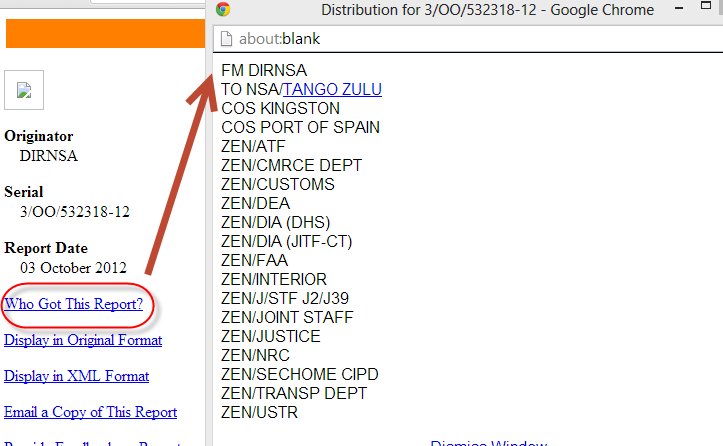
The report raises the specter of abusing online viewing records to discredit other political opponents of the US government. The NSA document was reviewed not just by the NSA and counter-terrorism officials, but by entities like the Department of Commerce and the US Trade Representative. The USTR negotiates treaties (like the controversial Trans-Pacific Partnership), and one could certainly imagine that the leverage from this program could be useful in pushing for the US position. In fact, EFF and three dozen civil society groups have already asked the NSA to explain if they are spying on those advocating for the public interest in US trade policy.
Ed Snowden's latest revelation may leave SEC officials quaking as the NSA "has been gathering records of online sexual activity and evidence of visits to pornographic websites as part of a proposed plan to harm the reputations of those whom the agency believes are radicalizing others through incendiary speeches." Of course, as we have seen, this 'information' would never be used by the government for non-radical-terrorist suppressing reasons, as the ACLU notes, is is "an unwelcome reminder of what it means to give an intelligence agency unfettered access to individuals' most sensitive information using tactics associated with the secret police services of authoritarian governments."
Via Snowden...
The National Security Agency has been gathering records of online sexual activity and evidence of visits to pornographic websites as part of a proposed plan to harm the reputations of those whom the agency believes are radicalizing others through incendiary speeches, according to a top-secret NSA document.

The document, provided by NSA whistleblower Edward Snowden, identifies six targets, all Muslims, as “exemplars” of how “personal vulnerabilities” can be learned through electronic surveillance, and then exploited to undermine a target’s credibility, reputation and authority.

The NSA document, dated Oct. 3, 2012, repeatedly refers to the power of charges of hypocrisy to undermine such a messenger.”
Full ACLU Statement:
The NSA considered discrediting six people by revealing surveillance evidence of their online sexual activity, visits to pornography websites, and other personal information, according to a report today in The Huffington Post. The article cited documents leaked by former NSA contactor Edward Snowden. The targets of the NSA’s plan were all Muslims whom the NSA characterized as “radicals” but who were not believed to be involved in terrorism. The documents say one of the targets was a “U.S. person,” a term describing American citizens and legal permanent residents, but all of the targets were reportedly outside the United States.

American Civil Liberties Union Deputy Legal Director Jameel Jaffer had this reaction:

“This report is an unwelcome reminder of what it means to give an intelligence agency unfettered access to individuals' most sensitive information. One ordinarily associates these kinds of tactics with the secret police services of authoritarian governments. That these tactics have been adopted by the world’s leading democracy – and the world’s most powerful intelligence agency – is truly chilling.”

The administration keeps on attempting to justify the NSA spying by claiming there is oversight from the other branches of government. But, as Pentagon Papers whistleblower Daniel Ellsberg noted in the Why Care About NSA Spying video, spying makes a mockery of that separation. How can that oversight be meaningful if the NSA's huge storehouse of information contains the private viewing habits of every senator, representative, and judge? When the only protection against abuse is internal policies, there is no serious oversight. Congress needs to take action now to rein in the spying.


on Saturday, 7 December 2013
Times of India |1 day ago |Posted By: landmarkvacanc ymanagemen
Security experts have uncovered a trove of some 2 million stolen passwords   to websites including Facebook, Google, Twitter and Yahoo from internet users across the globe. 

Researchers with Trustwave's SpiderLabs said they discovered the credentials while investigating a server in the Netherlands that cybercriminals use to control a massive network of compromised computers known as the "Pony botnet." 

The company said that it has reported its findings to the largest of more than 90,000 websites and internet service providers whose customers' credentials it had found on the server. 

The data includes more than 3,26,000 Facebook accounts, some 60,000 Google accounts, more than 59,000 Yahoo accounts and nearly 22,000 Twitter accounts, according to SpiderLabs. Victims' were from the United States, Germany, Singapore and Thailand, among other countries. 

Representatives for Facebook and Twitter said the companies have reset the passwords of affected users. A Google spokeswoman declined comment. Yahoo representatives could not be reached. 

SpiderLabs said it has contacted authorities in the Netherlands and asked them to take down thePony botnet server. 

An analysis posted on the SpiderLabs blog showed that the most-common password in the set was "123456," which was used in nearly 16,000 accounts. Other commonly used credentials included "password," "admin," "123" and "1." 

Graham Cluley, an independent security expert, said it is extremely common for people to use such simple passwords and also re-use them on multiple accounts, even though they are extremely easy to crack. 

"People are using very dumb passwords. They are totally useless," he said.

on Monday, 25 November 2013
Hacking has traditionally been a man’s world, but women are quietly breaking into the hacker subculture. Take a look at top 5 female hackers in the world.

1. Kristina Vladimirovna Svechinskaya


Kristina Svechinskaya, a New York University student is one of the most common names in the hacker’s world. She is Russian money mule maker who was arrested on November 2010 and accused of breaking into millions of dollars from several banks in Britain and America and for usage of multiple fake passports. Svechinskaya was dubbed "the world's sexiest computer hacker" for her raunchy, but casual appearance.


Svechinskaya used Zeus trojan horse to attack thousands of bank accounts along with nine others and opened at least five accounts in Bank of America and Wachovia to disburse the theft money. For all her hacking activities and for using the passports fraudulently it is said that she may have to pay huge penalty of 40 years of imprisonment. It is estimated that with nine other people Svechinskaya had skimmed $3 million in total.


2.Joanna Rutkowska

Joanna Rutkowska

Joanna Rutkowska is a Polish woman who is interested in the world of hacking security. Her name first became known as the Black Hat Briefings conference in Las Vegas, August 2006. Rutkowska presented during which the attack she had done to the security system windows vista. Not only that, Rutkowska also been attacked Trusted Execution Technology and Intel's System Management Mode. 

Early 2007 she formed Invisible Things Lab in Warsaw, Poland. A company that focuses on OS security research and consulting services as well VMM internet security. The year 2010 also Rutkowska with Rafal Wojtczuk form Qubes, an Operating System that is very full protect security. Rutkowska also open to advise Vice President of mikocok Security Technology Unit to further tighten the security system in windows vista. Waw, Rutkowska is a hacker who is very welcome to work with.


3. Ying Cracker

Ying Cracker

Cracker ying, a teacher from Shanghai China. SHe taught about the basic process of hacking guide, how to change the IP address or manipulate office password, wow!
She is also an expert in making software hackers.
In a forum titled Chinese Hackers Hottie, his name is much discussed and it makes its popularity gaining altitude. In the forum she's also got a lot of fans members. It was the beginning credibility soar.


4. Raven Alder

Raven Alder

Raven graduated from high school at the age of 14 and college at 18. She was the first woman to give a presentation at the DefCon hacker’s conference. Adler an half ISP engineer, half security geek, is a contributing author to several technical books, magazines and a frequent speaker at conferences She designs, tests and audits intrusion detection systems for large federal agencies. She has worked as a Senior Backbone Architect and Senior Security Consultant in IT security. Her interest in securing networks end-to-end has led her to examine and pioneer standards in the security of network infrastructure.


5. Xiao Tian 
 Xiao Tian
Xiao Tian, just out of her teenage became famous after forming China Girl Security Team, a group of hackers especially for woman which is China's largest today, the group has over 2,200 members. Tian created the now-infamous hacking team because she felt that there was no other outlet for teenage girls like herself in the male-dominated world of hacking. Its time to Move over male Asian nerdy computer geeks, female Asian nerdy computer geeks are here to stay.

on Saturday, 26 October 2013
The National Security Agency’s website has been down for at least 30 minutes. Officials have acknowledged the outage, but won’t say if it was hacked. At least a few Twitter accounts that sound like the elite hacktivist contingent, Anonymous, are taking credit.
Official Anonymous channels are just making fun of the outage:
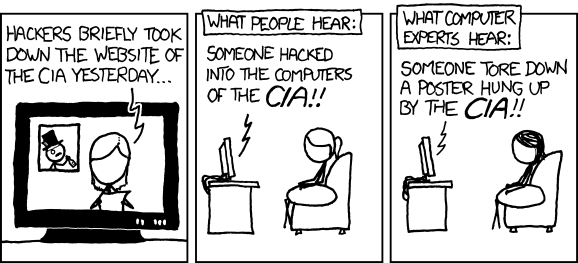
To be sure, The NSA’s website has been hacked before. But, we won’t speculate, for fear of perpetuating the kinds of rumors implied by this delightful XKCD comic:


While we’re all waiting to figure out what went wrong, feel free to add your own Healthcare.gov jokes in the comments.
Update: LOLZ

on Friday, 18 October 2013
World's Largest Web Hosting company "LeaseWeb" Hacked by KDMS Team


LeaseWeb is one of the World's largest hosting provider has been defaced by Palestinian hackers, named as KDMS Team. LeaseWeb was also hosting provider for one of the biggest file-sharing website Megaupload in the past. Later Megaupload Founder, Kim Dotcom claimed that Leaseweb had deleted all Megaupload user data from 690 servers without warning.

The hacker group replaced the Homepage of the website for just a few hours with an Anonymous Palestine, homepage titled "You Got Pwned" and the defacement message says:

     Hello Lease
     Web Who Are You ?
     Who is but the form following the function of what
     and what are you is a hosting company with no security
     KDMS Team : Well ,, We Can See That :P

We noticed that Attacker has just changed the DNS server to point the Domain to another server at 67.23.254.6, owned by the attacker. At the time of writing, Leaseweb team resolved the issue and get their Domain back to the original server.

But because the hack was done just a few hours back, Google DNS cache still pointing to domain to the attacker's server. Change your their DNS server to 8.8.8.8 and access LeaseWeb site again, you will be able to see the defaced page, as shown above.

The hacker also posted on the homepage,"Do You Know What That Means ? We Owned All Of Your Hosted Sites Index On Your Site Is The Prove ;)".

It seems a DNS hijacking only, But Hackers told The Hacker News, "We owned Leaseweb  Servers and kept some of their servers for us. But we only changed the DNS Server for now, because we faced some problems with the company website. Here, all what we need .. is to add our signature on their homepage to prove that there is not Completely Secure. If we can pwn them, we can hack other big providers too.,"

The hackers didn't claim that they get hold on customers' information or Credit card numbers. Stay tuned with us for further updates on this hack Story.

Update (9:35 PM Saturday, October 5, 2013 GMT): We contacted and ask LeaseWeb to provide an official statement over the Hack and claims by Hacker.

Update (5:51 AM Sunday, October 6, 2013 GMT): LeaseWeb confirmed the hack and tweeted, "Website should be back to normal in a few hours. No customer data compromised. We continue to investigate."

Hackers exploited a Zero-day SQL Injection flaw in Web Hosting software WHMCS used by LeaseWeb also.
 
on Sunday, 13 October 2013


1. China


The Chinese may not always guilty, but have a share of 41% of hacker attacks. Just one year before the Republic of China was responsible for only 13% of cyber attacks according to Akamai, and share in the third quarter was 33%.

2. U.S.A

Every tenth hacker attacks worldwide originated in the United States.

3. Turkey

Bronze medal for Turkey, accounting for 4.7% of global cybercrime.

4. Russia

Russia is considered to defuse the situation from 6.8% to 4.3% October-December 2012.

5. Тaiwan

Taiwanese are responsible for 3.7% of computer crimes at the end of 2012

6. Brazil

Brazil registered a decline of hacking attacks - from 4.4% at the end of 2011 to 3.8% in the third quarter of 2012 and 3.3% - in the fourth.

7. Romania

The seventh is Romania with a share of 2.8%.

8. India

India is responsible for 2.4% of hacking attacks worldwide.

9.Italy

Italy's share falling to 1.6%.

10. Hungary

Hungary is responsible for 1.4% of cyber attacks in late 2012.

on Saturday, 12 October 2013


A legal dispute over Google's practice of tracking users to create targeted advertisements ended Wednesday as a federal judge ruled in the company's favor.
A class action lawsuit, titled Google Inc. Cookie Placement Consumer Privacy Litigation, was brought by web browser users who alleged that Google avoided browser security settings, using cookies to track usage on computers and mobile devices. The plaintiffs alleged that the company wrongfully maneuvered its way through browser security. They further claimed that this tracking information informed Google's use of targeted ads.
The lawsuit, which also named online advertisers Vibrant Media and Media Innovation Group, was thrown out by a federal judge in Delaware on Wednesday. Judge Sue Robinson acknowledged the fact that the companies in question avoided browser security, tracking the users, but said the plaintiffs did not prove they suffered damage from this action.
In an official document reproduced by CNET, the judge explained the reasons for the decision. Chief among these is the argument that "the transfer of inputted information (which would have occurred regardless of Google's placement of cookies) does not rise to the level of a serious invasion of privacy or an egregious breach of social norms."
What do you think of the ruling? Tell us your opinion in the comments below.
[via Wall Street Journal, CNET]
Image: Flickr, Victor1558

on Friday, 11 October 2013
Computer security threats are relentlessly inventive. Masters of disguise and manipulation, these threats constantly evolve to find new ways to annoy, steal and harm. Arm yourself with information and resources to safeguard against complex and growing computer security threats and stay safe online.

image credit - www.schoolcounselor.com  


Computer Virus Threats

Perhaps the most well known computer security threat, a computer virus is a program written to alter the way a computer operates, without the permission or knowledge of the user. A virus replicates and executes itself, usually doing damage to your computer in the process. Learn how to combat computer virus threats and stay safe online.

Spyware Threats

A serious computer security threat, spyware is any program that monitors your online activities or installs programs without your consent for profit or to capture personal information. We’ve amassed a wealth of knowledge that will help you combat spyware threats and stay safe online.

Hackers & Predators

People, not computers, create computer security threats and malware. Hackers and predators are programmers who victimize others for their own gain by breaking into computer systems to steal, change or destroy information as a form of cyber-terrorism. What scams are they using lately? Learn how to combat dangerous malware and stay safe online.

Phishing Threats

Masquerading as a trustworthy person or business, phishers attempt to steal sensitive financial or personal information through fraudulent email or instant messages. How can you tell the difference between a legitimate message and a phishing scam? Educate yourself on the latest tricks and scams.

on Saturday, 17 August 2013
 
 
It's not paranoia: Using public or open Wi-Finetworks without taking your security into consideration is a bad idea. You don't even have to crack the network's passwords to grab tons of data from unsuspecting users on the network-We've shown you how to do it, and how to stop it from happening to you. Now, dSploit, a security toolkit for Android, makes that process so simple anyone can do it. Here's how it works, and how to protect yourself. 

What is dSploit ?
dSploit is actually a suite of security tools bundled together in one application. It runs on rooted Android (2.3+) devices, its code is freely available at GitHub, and it's actually a great utility if you're a security professional or otherwise enjoy the ins and outs of network security, hacking, and penetration testing. We want to be clear that we're not villainizing the tool here; unlike apps like Firesheep, Faceniff, and Droidsheep, dSploit isn't made for the sole purpose of cracking networks or hijacking user sessions. It can certainly sniff out passwords transmitted in plain text on an open network, and it can crack poorly secured Wi-Fi networks. It can also scan networks for vulnerabilities, crack keys on common routers, and of course, hijack browser, website, or social network sessions and hold on to them. You can see a full list of the tool's features here. 

For a security professional, an amateur looking for an affordable way to learn more about network security (or who's been tasked by their office to secure their Wi-Fi but can't afford professional pen-testers), or someone looking to protect their own network, dSploit can be a valuable resource. It can also be a valuable resource for people looking to steal your data. That's why we're going to talk about how it works and how you can protect your passwords and private data from anyone else using it. 

How dSploit (and other apps like it) work
dSploit makes it easy to do two things: Sniff out passwords being sent unencrypted, and hijack active browser sessions so you can masquerade as someone who's already logged in to a site or service. In both cases, they're really one-touch operations once you have the app installed. The former is easy to do. If someone is visiting a site, or logging in to a service without using HTTPS or SSL, your password is likely being sent in clear text. Anyone sniffing packets on a network can capture them without having to do any real kind of packet inspection, and once they have it, they'll try it on as many sites and services as possible to see if you use it for other accounts. The video above, from OpenSourceGangster, explains how the app works in detail, and how to use it. 

The latter is a bit more intricate. If you're not familiar with session hijacking, it's the process of capturing cookies to exploit a valid active session that another user has with a secured service in order to impersonate that other user. Since no sensitive data like a login or password is transmitted in the cookie, they're usually sent in the clear, and in most cases they're used by web sites and social networks as a way of identifying a user with a current session so the site doesn't forget who you are every time you reload. This is the most common attack vector for apps that sniff out passwords and sessions via Wi-Fi. We showed you how this works when Disconnect, one of our favorite privacy protecting browser extensions, added protection against widget jacking and session hijacking, if you want to see an example. 

dSploit approaches session hijacking in a similar manner to the other tools we've mentioned, mostly because it works well. The folks over at MakeUseOf explain how the app works in further detail, including some of the things you can do with it. Many web sites just encrypt your username and password, and once that handoff is made, everything else is unencrypted. While many sites have moved to HTTPS (and there are tools to help that we'll get to a little later), most require you to activate their HTTPS features. Many other sites haven't bothered moving to HTTPS universally at all. 

What's the real risk here ?
The real risk from tools like this varies. The odds of you encountering someone in your local coffee shop running dSploit, Firesheep, or any other app like them to capture passwords and hijack sessions is pretty slim, but as we've mentioned, it only takes one person to ruin your day. 

Someone could just capture as many Facebook or Twitter sessions as they can (after which they can change a user's password and keep the Facebook account for themselves), hijack Amazon shopping sessions and grab address and credit card information, read your email and chats, and so on. The risk goes up with more and more tools available that are easy for anyone to use, and with the number of people out there who simply don't protect themselves by encrypting their data. 

How can I protect myself ?
Protecting yourself from these tools like it is actually remarkably easy if you put in the effort to actually do it: 

* Turn on HTTPS on every site that allows you to connect with it, and install HTTPS Everywhere. This will make sure you're using HTTPS at all times, whenever possible, and none of your web browsing traffic is sent unencrypted. 

* Get a privacy-protecting browser extension like Disconnect, which also protects against widget jacking or side-jacking. Disconnect is our favorite, but it shouldn't be the only tool in your toolkit. 

* Use a VPN when browsing on public, free, or other open networks. We've explained why you should have a VPN before. We've even explained how to tell if a VPN is trustworthy. Using a VPN is the best way to make sure all of your data is encrypted and safe from anyone else on the same network, whether it's wired or wireless, public or private. 

* Use your head, and practice good internet hygiene. Hone your phishing and scam detection skills, turn your BS detecter up to max, and learn how to protect yourself from online fraud. Someone doesn't have to hijack your session or passwords to get to you-they could just as easily replace the website you're on with one that looks like it but insists you give it a ton of data first. Be smart. 

* It doesn't take much to use HTTPS everywhere you can, fire up a VPN if you're going to be working from the library, or just not to use public Wi-Fi and wait until you get home or tether to your phone instead (that's always another option). However, if everyone did it, unscrupulous use of tools like these wouldn't' be an issue and only the people who needed them would use them. However, as long as they're so effective, it makes sense for you to take the necessary steps to protect yourself.


Your PayPal account has been locked!

Confirm your Bank Information Now!
You’ve Received a Secure Fax From The IRS.
Email spoofing  is the creation of email messages with a forged sender address - something which is simple to do because the core protocols do no authentication. Spam and phishing emails typically use such spoofing to mislead the recipient about the origin of the message.
A number of measures to address spoofing are available including: SPF, Sender ID, DKIM, and DMARC. Although their use is increasing, it is likely that almost half of all domains still do not have such measures in place. Email spoofing, the process of sending emails designed to appear as if they were sent by another sender, is certainly not a new method of distributing malware that harvests personal information or financial data. Each year, potentially hundreds of new spoofing schemes appear, ranging from emails claiming to contain faxes from the IRS to videos of social events such as the Boston marathon bombing.
email securityMere hours after the recent Oklahoma tornadoes, the various email traps (often referred to as SpamPots, a take on the term HoneyPot) used by the StopSign research and development team to collect samples and monitor trends had already seen several large surges of emails attempting to capitalize on the disaster, almost all of which containing attached viruses or links to malicious web sites.
There are several key actions you can take to protect yourself.
  • Don’t Click the Link — If a bank or merchant needs your information, you will always be able to enter it directly on their website, logging in as you normally would.
  • Don’t Open the Attachment — If you are not expecting an email attachment, or if it seems out of character for the sender, don’t open the attachment, even if the sender is someone you know personally.
  • Update Your Virus Scanner — Even emails you were expecting, and from people you know and trust, can contain viruses and links to malicious sites the sender may not have noticed.
Scanning every unknown file is always good policy, regardless of its origin. Even large corporations, which may rely on the browsing and email habits of hundreds if not thousands of people, are not free from the risk of infection. On more than one occasion, history has even seen companies accidentally distribute viruses via CD and even seemingly harmless devices containing flash memory. You can safeguard your own computer, but you can never account for another’s actions.
When an SMTP email is sent, the initial connection provides two pieces of address information:
  • MAIL FROM: - generally presented to the recipient as the Return-path: header but not normally visible to the end user,and by default no checks are done that the sending system is authorized to send on behalf of that address.
  • RCPT TO: - specifies which email address the email is delivered to, is not normally visible to the end user but may be present in the headers as part of the "Received:" header.
Together these are sometimes referred to as the "envelope" addressing, by analogy with a traditional paper envelope.
Once the receiving mail server signals that it accepted these two items, the sending system sends the "DATA" command, and typically sends several header items, including:
  • From: Joe Q Doe <joeqdoe@example.com> - the address visible to the recipient; but again, by default no checks are done that the sending system is authorized to send on behalf of that address.
  • Reply-to: Jane Roe <Jane.Roe@example.mil> - similarly not checked
The result is that the email recipient sees the email as having come from the address in the From: header; they may sometimes be able to find the MAIL FROM address; and if they reply to the email it will go to either the address presented in the MAIL FROM: or Reply-to: header - but none of these addresses are typically reliable
Safe browsing!. is my responsibility to keep u more secure ...
 
on Friday, 9 August 2013

In Indian today is Eid and on this occasion, an Indian Hacker “GODZILLA” who is famous for hacking Pakistan Govt. websites again hacked and defaced the official website of the Pakistan Army(pakistanarmy.gov.pk).
Hacker also hacked three Pakistan Army Facebook pages:

If you are puzzled that how a hacker able to do these hacks so here is your answer:

Hacker Gaodzilla told E Hacking News that he planted a PDF exploit on the website which allowed him to install a piece of malware on the administrator’s computer.
After the hacks, the pages were removed.
Hacker Godzilla said:
“Now no more deals, if you can fire then we can bombard You are punished for breaking ceasefire we are coming for you,”
Currently, the Pakistan Army’s website and the Facebook pages are restored and working properly.
Here are the previous hacks by Hacker GODZILLA:

GODZILLA Pakistan Hack completed , Database has been Leaked socially


Like we said we are keeping you update on GODZILLA who is hacking Pakistan Government website from three days and yesterday also we reported that Pakistan websites are not running up and  now “GODZILLA” aka G.O.D has completed his Cyber Attack on Pakistan.
The great News is this that he has leaked the database of Pakistan Government Websites and posted socially online at Pastebin here-http://pastebin.com/ZWdxE8CW
There are total three admins managing the whole stuff of imp Pakistan cyber space. There is almost a common database for all the websites and these websites are Vulnerable to SQL Injection.

What has been Leaked?

  • Username
  • Password(plain-text)
  • Database name
  • Table name and other details.
Hackers Voice

Reason for attack: Pakistan’s Support to Terrorism
I must say without you it would have been difficult for us to penetrate into the system and your common password “111111″ was like a magical stick for us.
Pakistan is a country which is currently supporting terrorist activities through ISI, and if they regret Pakistan army and Ministry of Defense mail server backups are enough to proof how closely the are related to terrorism. Pakistan stop these activities before its too late.

Pakistan again under Godzilla Attack- A revenge from Indian Patriot Hacker


Again and again Pakistan websites are going hacked by “Godzilla” we are in touch with the news that what is next and yesterday when Godzilla took control on the Proxy server which was used by PakistanGovernment website and they all were down yesterday.
Today what happened Godzilla now have got access to the backup server and he told that backup server is also saved on the same network.
According to Godzilla Pakistan.gov.pk only just pretending that it is up and in actually they are not running.
Hackers Voice
“One thing is true Pakistan is good at pretending like nothing happened, let it be a cyber attack or a TERRORIST attack. “ 

After clicking the login button on Pakistan.gov.pk it is redirecting to an IP Address (202.83.164.27) this was using by the Pakistan Government when they didn’t have proxy system.
Now Hacker is Extracting the Database and once he extracted the data, he will take down rest of the IP Addresses. 

Pakistan Intelligence Agency was Hacked by an Indian Hacker

You know one news while whole world was busy in Anonymous hacking a Hacker hacked Pakistan Intelligence Agency (ISI).

The hacker name is “Godzilla” and he has claimed that he has hacked into the server of ISI website (http://isi.org.ok) and you know that he has hacked all the sensitive information about
Pakistan Intelligence.

And he has claimed also to access Remote Desktop Protocol (RDP) of the server located at 173.193.110.72.

He disclosed the complete info of the System that it has Windows 2008 server standard edition and having three derives i.e C,D,E with operating system in C and Hostname ‘AHCORP‘.
He also hacked into MSSQL server which containing 3 databases with 9 users and the url is  http://mssql.isi.org.pkand Screenshots taken by him which is below:-
Some partial tables of the database ‘msdb‘ as listed below:
  • bakupfile
  • bakupmediafile
  • bakupmediaset
  • backupset
  • logmarkhistory
  • restorefile
  • restorehistory
  • suspect_pages
Please for supporting us more Don’t Forget to Like us on Facebook because we want your Support to do more for you..like it..